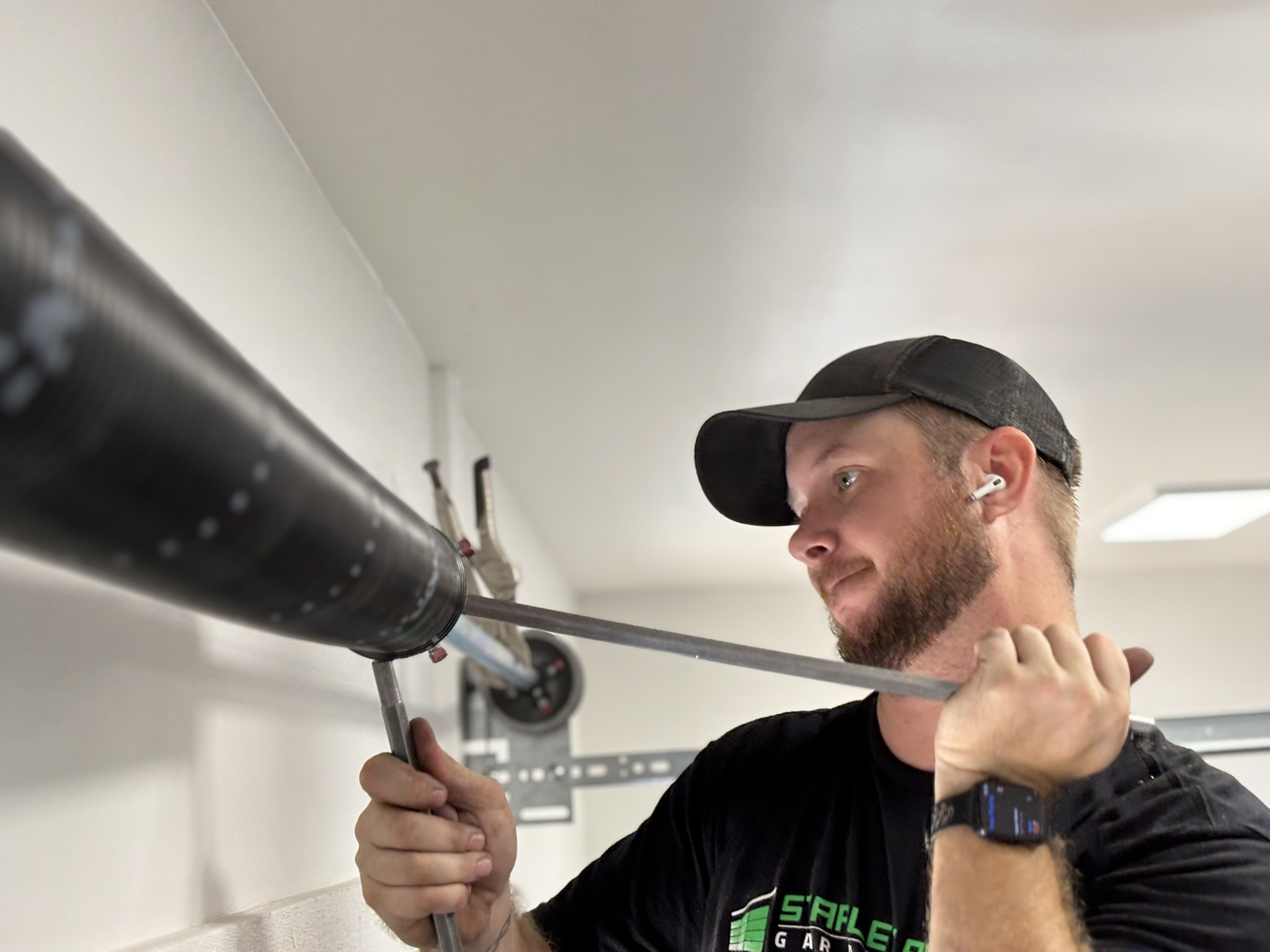
If a garage door spring is going to break in Mesa, there is a good chance it happens between June and September. That is not a coincidence, and it is not bad luck. There is a specific mechanism behind it, and understanding it is different from just knowing the warning signs. It is the difference between reacting to a snapped spring and seeing one coming.
Short answer: Garage door springs fail through metal fatigue, a build up of microscopic stress fractures over thousands of open and close cycles. Arizona heat does not cause that fatigue, but it accelerates it, which is why springs in Mesa tend to reach the end of their rated life sooner than the same spring would in a milder climate.
How a Spring Actually Fails
This is not simply “hot weather is hard on everything.” There is a real process at work.
Metal fatigue is a countdown, not an accident
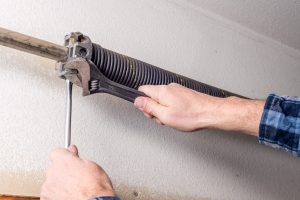
Every time the door opens and closes, the spring winds and unwinds and the steel flexes. Each cycle leaves a trace. Over thousands of cycles those traces become stress fractures, they spread, and eventually the spring gives. A standard spring is rated for around 10,000 cycles, and that rating is the honest measure of its life, not the number of years on a calendar.
Heat adds a second cycle on top of the first
A Mesa garage can swing from well over 120 degrees on an afternoon to far cooler overnight. Metal expands and contracts through that swing, so the spring is being worked thermally even on days the door barely moves. An attached garage with a west or south facing door catching direct sun also sits at an elevated baseline temperature for months, so the steel rarely gets a genuine rest.
Cycle count matters more than most people think
This is the part homeowners underestimate. A household opening the door three or four times a day might get seven to twelve years out of a 10,000 cycle spring. A busy family cycling it eight or ten times a day can reach the same number in four. If your garage door is the main entrance to your house, and in Mesa it usually is, your springs are working far harder than the rating assumes.
Why This Beats Just Watching for Warning Signs
Most homeowners learn to watch for a loud bang, a door that suddenly feels heavy, or a visible gap in the coil. Those signs are real and worth knowing, and we covered them in signs it is time to replace your springs. The problem is that they appear right before failure, not months ahead of it.
Cycle count and heat exposure are what actually explain why a spring that looked fine in April fails in July. If you know roughly how old the springs are and how often the door runs, you can plan a replacement instead of discovering the answer with a car stuck inside.
What Actually Extends Spring Life
- Match the spring to the duty cycle, not to whatever was there. High cycle springs rated for 20,000 or more are available and are worth it on a door that runs constantly or sits in direct afternoon sun.
- Keep the door balanced. An unbalanced door forces the springs and the opener to fight each other on every cycle. More on that in the importance of balancing your springs.
- Replace in pairs. Both springs have taken the same cycles and the same summers.
- Do not wait for the bang. By the time you hear it, the spring has fully failed and the door is unsafe to operate.
Get Your Springs Looked At Before Summer Finishes Them
Stapley Action Garage Door has served Mesa and the East Valley for over 15 years. Family owned, a certified Clopay and LiftMaster dealer, with same day garage door spring repair and no trip fees. If you want the numbers first, our guide to spring replacement cost in Mesa lays out the pricing, and our spring replacement page covers the process itself.
Call (480) 655-1255 for a free, no obligation estimate, or reach out here. If your springs have already been through a few Arizona summers, it is worth a look before one of them picks the timing for you.
Frequently Asked Questions
Why do garage door springs break?
Springs fail through metal fatigue. Every open and close cycle flexes the steel slightly, and microscopic stress fractures build up over thousands of cycles until the spring gives. It is a wear process with a countdown, not a random fault, which is why breakage tends to arrive around a predictable cycle count rather than out of nowhere.
How long do garage door springs last?
A standard spring is rated for roughly 10,000 cycles, which is about seven to twelve years for an average household opening the door three or four times a day. In Mesa, expect the lower end of that. Heat and high daily use both pull the real figure down, and a household that cycles the door eight times a day can burn through a 10,000 cycle spring in four.
Does Arizona heat really shorten spring life?
It contributes. Heat does not create metal fatigue on its own, but a garage that swings from 120 degrees in the afternoon to far cooler overnight adds a thermal cycle on top of every mechanical one, and an attached Mesa garage sits at an elevated baseline temperature for months. The bigger factor is still cycle count, so treat heat as an accelerant rather than the whole cause.
Is a broken garage door spring an emergency?
Yes. With a spring gone the door’s full weight is no longer counterbalanced, so it can be extremely heavy and can drop. Do not try to lift it or run the opener, and do not park under it. This is a same day repair.
Should I replace both springs if only one broke?
On a two spring door, usually yes. Both were installed together, have taken the same cycle count and the same summers, and the second is typically close behind. Replacing both at once costs less than two separate visits.
Can I replace a garage door spring myself?
We would not recommend it. A torsion spring holds enough stored energy to cause serious injury, and winding it requires the correct bars and the correct turn count for the door’s weight. This is the repair where the gap between a professional and a video is widest.